


In recent days and weeks, Bitcoin has seen a renewed surge, breaking above $120,000 in many markets — rekindling enthusiasm among investors, analysts, and the crypto-curious alike. But this isn’t just another short-lived pump. In this blog-style exploration, I’ll walk you through:
- The key drivers behind Bitcoin’s resurgence
- Historical performance and return perspectives
- Profitability aspects (especially mining and holding)
- Risks, caveats, and what to watch going forward
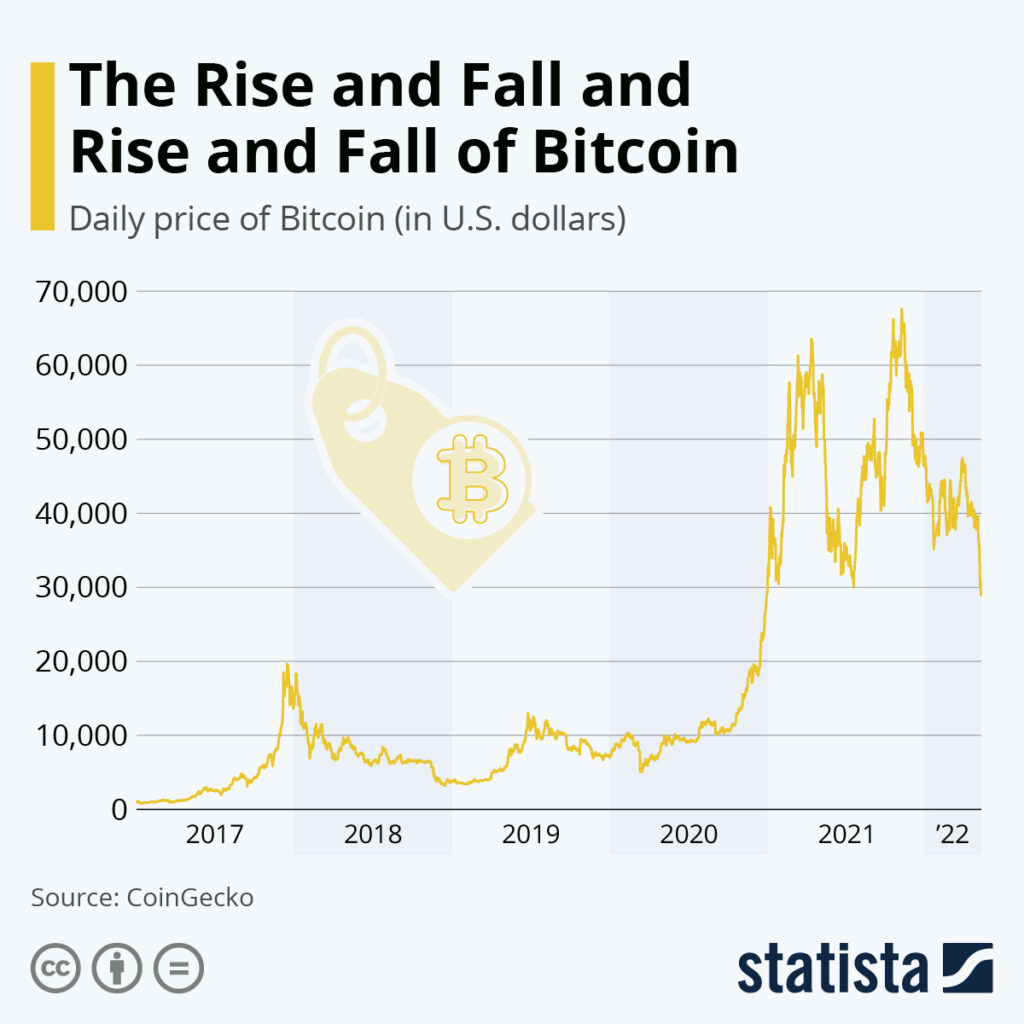
1. What’s Fueling Bitcoin’s Recent Rally?
Bitcoin doesn’t move without reason — even when much of the market behavior appears exuberant or speculative. Below are some of the major factors that have converged to push Bitcoin upward lately.
1.1 Institutional & ETF Inflows
One of the most-cited drivers is strong demand from institutional investors and inflows into Spot Bitcoin ETFs. These vehicles allow large-scale capital to enter the space in a regulated format — effectively bridging the gap between traditional finance and crypto. Reuters+2Coinpedia Fintech News+2
Such flows can sustain momentum better than pure retail speculation.
1.2 Macro Conditions & Interest Rate Expectations
Financial markets are sensitive to central bank policies. Recently, weak U.S. economic data (especially labor reports) have revived expectations that the U.S. Federal Reserve may cut interest rates. Lower interest rates typically reduce the opportunity cost of holding risk assets like Bitcoin. The Cryptonomist+3Barron’s+3Barron’s+3
Additionally, the ongoing U.S. government shutdown has introduced uncertainty — pushing capital toward perceived hedges or alternative stores of value. CoinDesk+2Barron’s+2
1.3 Supply Constraints & “Halving Effect”
Bitcoin’s supply is capped at 21 million coins, and roughly every four years, the block reward (new issuance) is cut in half — a mechanism known as halving. Over time, with demand stable or increasing and supply growth slowing, upward pressure on price is expected. The Case for Bitcoin+3The Cryptonomist+3OANDA+3
Even though the most recent halving occurred earlier, the market often prices in these effects ahead of time.
1.4 Whale Accumulation & Deep Holder Confidence
“Whales” (entities or individuals with large BTC holdings) appear to be accumulating, reducing available supply in active circulation. The Economic Times+1
These accumulation trends can create a “squeeze” effect — as price rises, it becomes harder to acquire large blocks without pushing the price further.
1.5 Inflation, Government Debt & Dollar Sentiment
With rising public debts, inflation concerns, and questions around the strength of fiat currencies (especially the U.S. dollar), many see Bitcoin as a hedge. Analysts at JPMorgan have even compared Bitcoin’s trajectory to gold’s record run, speculating that BTC could reach $165,000 under certain assumptions. CoinDesk
This narrative — that Bitcoin is “digital gold” — resonates more in uncertain macro backdrops.
2. Historical Performance & Return Perspective
To better understand whether the current rally is odd or fitting into a pattern, let’s briefly look back at Bitcoin’s long-term returns and cycles.
2.1 Return Numbers Over the Years
- From 2011 to now, Bitcoin’s cumulative gain is astonishing: over 20,000,000% (i.e., a $1 investment would have grown ~200,000×). Bitcoin Magazine Pro
- In the past 10 years, Bitcoin has seen average annual returns (compound) anywhere from ~40–90% depending on the time window chosen. The Case for Bitcoin+2E*TRADE+2
- Year-to-year returns show massive variation:
| Year | Return (USD) |
|---|
| 2020 | +303% Slick Charts+1 |
| 2021 | +59.7% Slick Charts |
| 2022 | –64.3% (a major correction) Slick Charts |
| 2023 | +155% Slick Charts |
| 2024 | +121% Slick Charts+1 |
- So while the upside has historically been huge, the drawdowns have also been steep.
2.2 Comparisons with Traditional Assets
A comparison from CaseBitcoin charts Bitcoin’s ROI versus gold and the S&P 500:
- In 1 year: BTC up ~ +93%, Gold ~ +45%, S&P ~ +18% The Case for Bitcoin
- Over 5 years: BTC has outpaced both by a large margin. The Case for Bitcoin
But those gains come with higher volatility and risk.
2.3 Cycle Patterns & Market Psychology
Bitcoin tends to move in four-year cycles tied to halving events: accumulation → run-up → peak → correction → base → accumulation again. Many technical analysts and cycle models attempt to project the next major peaks via “cycle repeat” charts. Bitbo Charts
The current rally might be seen as part of that larger cycle — possibly heading toward a new peak if demand holds.
3. Profitability of Bitcoin (Holding vs Mining)
Investing in Bitcoin isn’t just about buying and holding; another angle is mining (creating new BTC via computational work). Let’s compare both:
3.1 Holding Bitcoin (Speculative / Long-term)
- Capital gains: If you buy BTC at $80,000 and it reaches $160,000, you’ve doubled your investment (ignoring fees).
- Passive strategy: Holding eliminates the technical, operational, and energy costs associated with mining or running infrastructure.
- Proof in performance: Historically, simply holding BTC over multi-year horizons has produced large returns — albeit with high drawdowns.
However, this strategy depends on:
- Trusting the long-run adoption story
- Being able to survive severe corrections
- Considering taxes, custody risks, and liquidity constraints
3.2 Mining Profitability
Mining is capital- and energy-intensive. Profit depends on hash rate, electricity cost, mining hardware efficiency, and BTC price.
- According to a mining profitability calculator (HashrateIndex), assuming certain parameters, current daily profit per unit can be low. Hashrate Index
- Historical mining profitability (expressed as USD per THash/s) tends to fluctuate heavily with BTC price and mining difficulty. BitInfoCharts
- As mining difficulty increases and block rewards are halved, margins compress unless prices rise or energy becomes cheaper.
Thus, mining can be profitable — but it’s riskier and operationally more demanding than simply holding BTC.
4. What Does This Mean — Risks, Caveats & What to Watch
A rally as strong as this invites both optimism and skepticism. Consider these points:
4.1 Risks & Drawdowns
- Volatility: Bitcoin is notoriously volatile. Sharp pullbacks (30–60%) have happened even in bull markets.
- Regulation & policy: Changes in government policy, taxation, or outright bans can rapidly shift sentiment.
- Competition & technology: Newer chains / Layer-2 solutions might erode part of BTC’s narrative or utility.
- Liquidity & supply constraints: Large holders selling or lacking buyers at higher prices can destabilize the move.
4.2 What to Monitor Going Forward
- ETF flows & institutional interest: Sustained capital inflows from institutions are more durable than retail hype.
- Interest rate / central bank signals: If central banks reverse course toward tightening, risky assets can suffer.
- On-chain metrics & whale activity: Monitoring large transfers, accumulation, and wallet behavior can give clues.
- Technical resistance levels & liquidity zones: The market will test supply zones where many sell orders are queued.
- Macro turmoil & safe-haven demand: If other asset classes face stress, BTC might behave like a speculative or hedge asset.
🔍 Final Thoughts
Bitcoin’s resurgence is being driven by a potent mix of macro tailwinds (rate expectations, fiscal concerns), strong institutional flows (ETFs, corporate treasuries), supply-side constraints, and renewed confidence from deep holders. Its long-term returns have been staggering — but not without harsh setbacks.
For investors, the decision often comes down to risk tolerance and conviction in Bitcoin’s future role in the financial system. And for miners, profitability will remain tightly coupled to efficiency, energy costs, and BTC’s market price.
If you like, I could turn this into a fully designed, image-rich blog post ready for your site (with captions, layout suggestions, and additional visuals). Do you want me to build that for you?