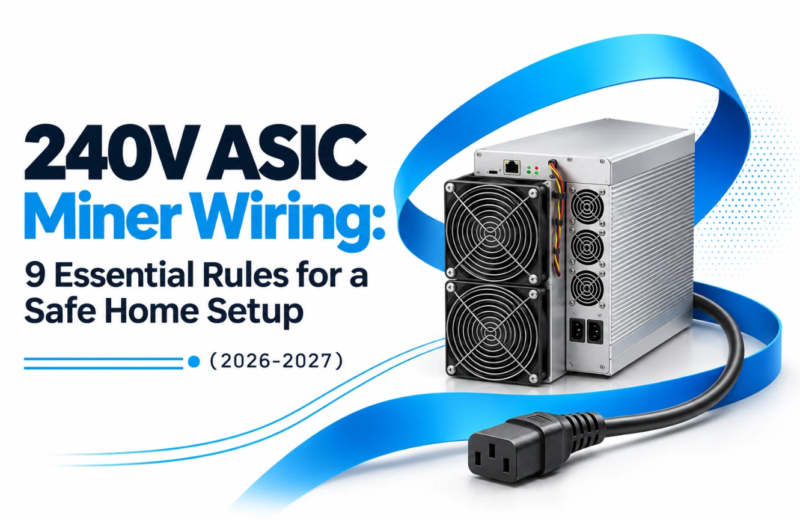


The Antminer S23 is Bitmain’s flagship Bitcoin miner for 2026, and it is the first air-cooled machine to break the 11 J/TH barrier. With network difficulty above 140 trillion and Bitcoin trading near $80,000 in late October 2026, efficiency is no longer a nice-to-have. It decides whether a miner survives the next two years. In this Antminer S23 review we break down the specs, real profitability, the Hydro versions, and who should (and should not) buy one.
Mine Mirth LLC sells and hosts Bitmain hardware every week, so the numbers below come from the same math we use when customers ask us, “Is the S23 worth it?”
Antminer S23 Specs at a Glance
| Model | Hashrate | Power | Efficiency | Cooling | Noise |
|---|---|---|---|---|---|
| Antminer S23 | 318 TH/s | 3,498 W | 11.0 J/TH | Air | ~75 dB |
| Antminer S23 Hydro | 580 TH/s | 5,510 W | 9.5 J/TH | Hydro | ~50 dB |
| Antminer S21 XP (for comparison) | 270 TH/s | 3,645 W | 13.5 J/TH | Air | ~76 dB |
| Antminer S21 Pro (for comparison) | 234 TH/s | 3,510 W | 15 J/TH | Air | ~76 dB |
Bitmain began shipping the first S23 batches in January 2026, with hydro and rack-mount versions (including the U3S23H) aimed at large farms. Specs above are manufacturer ratings; real results vary slightly by batch and firmware. You can compare these side by side with our ASIC Miner Comparison tool.
1. Best Air-Cooled Efficiency on the Market
At 11 J/TH, the Antminer S23 uses about 19% less energy per terahash than the S21 XP and about 27% less than the S21 Pro. That matters because electricity is 80-90% of a miner’s operating cost. Lower J/TH means a lower break-even power price, which means the machine keeps earning after future difficulty jumps and the 2028 halving.
2. Real Antminer S23 Profitability in 2026
Using a hashprice of roughly $37 per PH/s per day (late October 2026), here is what the S23 earns before pool fees:
| Electricity Rate | Daily Revenue | Daily Power Cost | Daily Profit |
|---|---|---|---|
| $0.06/kWh | $11.77 | $5.04 | $6.73 |
| $0.08/kWh | $11.77 | $6.72 | $5.05 |
| $0.10/kWh | $11.77 | $8.40 | $3.37 |
The S23’s break-even electricity price is about $0.14/kWh, compared with roughly $0.11/kWh for the S21 XP. Track live numbers with our Hashprice Tracker and plug in your own rate on the Mining ROI & Payback Planner.
3. The Antminer S23 Hydro Is a Monster for Farms
The S23 Hydro pushes 580 TH/s at just 9.5 J/TH. At $0.06/kWh it earns about $21.46/day in revenue against $7.93 in power, leaving roughly $13.50/day. It is also far quieter (around 50 dB at the unit) because heat leaves through a water loop instead of screaming fans. The catch: you need a dry cooler or cooling tower, plumbing and high-amperage 240V power. Learn more in our hydro-cooled miners guide.
4. Built for the 2028 Halving
Around April 2028 the block subsidy drops from 3.125 BTC to 1.5625 BTC. If price and fees do not rise, hashprice roughly halves. At that point the S23’s break-even falls to about $0.07/kWh, while older S19-series machines (around 30 J/TH) would need power under $0.03/kWh. Buying efficiency now is how you protect your investment through the halving. Read our Bitcoin halving countdown for timing.
5. Same Footprint, More Hashrate
The air-cooled Antminer S23 draws about the same power as an S21 Pro (roughly 3.5 kW) but delivers 36% more hashrate. If your site is limited by megawatts rather than capital, upgrading S19 or S21 units to S23s increases revenue without new electrical work. Our Miner Upgrade Calculator shows the payback on swapping old machines.
6. Familiar Bitmain Ecosystem
The Antminer S23 uses the standard Bitmain web interface, works with every major pool, and is supported by popular aftermarket firmware as support matures. Spare parts, PSUs and repair know-how are easier to find for Bitmain than for most brands. Mine Mirth customers also get access to our repair service and warranty support.
7. Strong Resale Value
Top-efficiency machines hold value far better than older models. When the next generation arrives, a well-maintained Antminer S23 will still be in demand by miners with cheap power, which lowers your true cost of ownership.
Antminer S23 Downsides to Consider
- Price per TH is high when a model is new. Early buyers pay a premium; prices typically fall over 6-12 months.
- Noise: the air-cooled S23 is around 75 dB. It is not a bedroom miner. See our guide to reducing ASIC noise.
- Power: it needs a dedicated 240V circuit. Plan wiring with our Mining Power Calculator & Circuit Planner.
- Import costs: US buyers should budget for tariffs and customs, which have changed several times since 2025.
Antminer S23 vs S21 XP: Which Should You Buy?
Choose the Antminer S23 if you pay above $0.07/kWh, plan to mine through the 2028 halving, or are space- and power-limited. Choose the S21 XP if you have very cheap power (under $0.05/kWh) and want the lowest upfront price per terahash. Either way, compare both in our Bitcoin miners collection and our most efficient miners page.
Who Should Buy the Antminer S23?
- Home miners with a garage or outbuilding and a 240V circuit
- Hosted miners paying $0.06-$0.08/kWh who want the longest runway
- Farms replacing S19-generation hardware
If your power is above $0.10/kWh, consider placing your S23 with a professional host. Compare costs with the Hosting vs Home Mining Calculator or explore Mine Mirth miner hosting.
Antminer S23 FAQ
How much does the Antminer S23 make per day?
At a hashprice of about $37/PH/day, an Antminer S23 earns roughly $11.77 per day in revenue before electricity and pool fees.
Is the Antminer S23 Hydro better than the air version?
For farms with hydro infrastructure, yes. It offers more hashrate and better efficiency. For home miners without plumbing, the air-cooled S23 is simpler.
How long will the Antminer S23 stay profitable?
With an 11 J/TH efficiency, the S23 should remain profitable at typical hosting rates well past the 2028 halving, assuming Bitcoin’s price does not collapse.
For independent spec data, see ASIC Miner Value. Ready to order? Contact Mine Mirth for current Antminer S23 pricing and availability.